
By Dr. Abhijit R. Chandankhede, Consultant Neurosurgeon and Spine Surgeon, Pune
Your spine carries you through every stage of life. It supports your body, protects your spinal cord, and lets you bend, twist and move. Yet back and neck pain are among the most common reasons people see a doctor, and long hours of sitting, screen use and stress are bringing these problems on at younger ages.
The good news: most spine problems can be prevented or managed well when you understand how the spine works and care for it early.
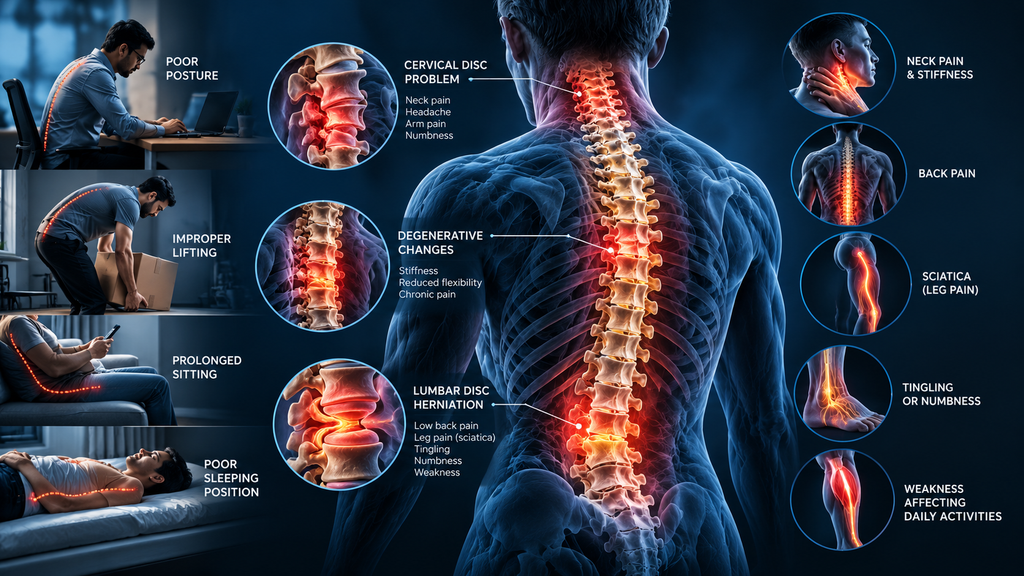
How the spine is built
The spine has 33 vertebrae in distinct regions:
- Cervical (neck): 7 vertebrae that support the head
- Thoracic (mid-back): 12 vertebrae attached to the ribs
- Lumbar (lower back): 5 vertebrae that carry most of your body weight
- Sacrum and coccyx: the base of the spine
Between the vertebrae sit intervertebral discs, which act as shock absorbers. The spinal cord and nerves run through the spinal canal, which is why spine problems can cause pain, numbness or weakness in the arms and legs.
Common spine problems
Muscle strain and mechanical back pain. The most common cause of back pain, linked to poor posture, weak core muscles or sudden heavy lifting. It usually improves with activity modification and exercise.
Slipped (herniated) disc. When the soft centre of a disc pushes out and presses on a nerve, it can cause back or neck pain along with pain, tingling or numbness down the arm or leg.
Sciatica. Pain travelling from the lower back through the buttock and down the leg, usually from a disc or a narrowed canal irritating the sciatic nerve.
Cervical spondylosis. Age-related wear in the neck, often causing stiffness, neck pain and sometimes arm symptoms.
Lumbar spinal stenosis. Narrowing of the spinal canal, common after 50, causing leg pain or heaviness while walking that eases on sitting or bending forward.
Spondylolisthesis. One vertebra slips forward over the one below it.
Osteoporosis and compression fractures. Weakened bones can lead to spinal fractures, even after minor falls.
Daily habits for a healthy spine
1. Fix your sitting posture. Keep feet flat on the floor and knees at about hip level. Support your lower back’s natural curve with a small cushion. Place your screen at eye level, and stand and move for a couple of minutes every 30 to 45 minutes.
2. Be careful with your phone. Looking down at a phone adds significant strain to the neck. Raise the device to eye level and take regular breaks.
3. Lift the right way. Bend at the knees and hips, keep the load close to your body, and avoid twisting while lifting.
4. Build core and back strength. A strong core works like a natural brace for the spine. Walking, swimming and cycling are low-impact choices. Bridges, bird-dogs and planks help, but learn them from a physiotherapist first to get the form right.
5. Maintain a healthy weight. Extra weight, especially around the abdomen, increases the load on the lower spine.
6. Sleep well. Use a medium-firm mattress. Side sleepers can keep a pillow between the knees; back sleepers can place one under the knees.
7. Quit smoking. Smoking reduces blood supply to the discs and is linked to faster disc degeneration and slower healing.
8. Eat for bone health. Get enough calcium, vitamin D and protein. Vitamin D deficiency is common in India, so it is worth getting your level checked.
Simple stretches to try
Gentle and general. Stop if anything causes pain.
- Chin tucks to relieve neck strain
- Cat-camel stretch to mobilise the spine
- Knee-to-chest stretch to ease lower back tightness
- Hamstring stretch, because tight hamstrings pull on the lower back
Red flags: when to see a spine specialist
Most back pain settles within a few weeks. See a doctor promptly if you have:
- Back or neck pain lasting more than 4 to 6 weeks
- Pain, numbness or tingling spreading into the arms or legs
- Weakness in a limb, dropping things, or tripping often
- Pain that is worse at night or at rest
- Pain after a fall or injury
- Unexplained weight loss or fever with back pain
Seek emergency care immediately if you have loss of bladder or bowel control, numbness in the groin or inner thighs, or rapidly worsening leg weakness. These can signal serious nerve compression that needs urgent treatment.
How spine problems are treated
Most patients never need surgery. Treatment usually begins with activity modification, short-term pain relief, physiotherapy and guided exercise, and targeted injections in selected cases.
Surgery is considered when there is significant nerve compression, progressive weakness, spinal instability, or pain that does not improve with proper non-surgical care. Modern techniques, including minimally invasive spine surgery, can mean smaller incisions, less tissue damage and faster recovery for suitable patients.
Key takeaways
- Good posture, regular movement and core strength are your best protection.
- Don’t ignore persistent pain or nerve symptoms.
- Early evaluation often means simpler treatment and better outcomes.
- Most spine conditions can be managed without surgery.
Frequently asked questions
Is back pain always serious?
No. Most back pain is mechanical and improves with time and exercise. Persistent pain, nerve symptoms or red flag signs need medical assessment.
Is bed rest good for back pain?
Prolonged bed rest usually delays recovery. Gentle movement is generally better.
Can a slipped disc heal without surgery?
Many do. A large share of disc herniations improve over weeks to months with conservative treatment.
Do I need an MRI for every back pain?
No. MRI is advised when symptoms are severe, persistent, involve nerve deficits, or follow trauma.
Can young people get spine problems?
Yes. Long sitting hours and poor ergonomics are causing early spine complaints in people in their 20s and 30s.
Book a spine consultation in Pune
If you have ongoing back or neck pain, leg pain or weakness, an early expert opinion can help you avoid complications. Consult Dr. Abhijit R. Chandankhede, Consultant Neurosurgeon and Spine Surgeon, at NeuroCure.in.
Disclaimer: This article is for general education and does not replace personal medical advice. Please consult a qualified doctor for diagnosis and treatment.